GENERAL
The process of separation in haemapheresis
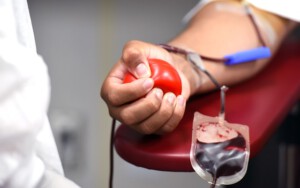
is performed permitting the blood after anticoagulation to flow from a vein of one forearm into
the separation system e.g. centrifuge. If cells are more or less specifically collected or
removed the procedure is named cytapheresis. If the blood fluid (plasma) is separated the term
plasmapheresis or plasmaseparation is applied. All procedures are performed on-line in blood
donors or patients using a continuous or discontinuous blood flow. The first separation step
(separation of cells from plasma or plasma from cells) is named primary separation. For primary
separation centrifuges are often superior to filtration techniques. A subsequent separation step
is named secondary or differential separation, referring to both cell differential separation
or plasma differential separation.
ACCESS TO THE BLOOD CIRCULATION
Standard haemapheresis procedures are
performed from one vein to the other (veno - venous access) of both forearms or as single vein
procedures. To apply an artificial access to the circulation especially arterio - venous fistulae
(shunts) is considered as unethical from apheresis specialists unless special reasons
(e.g. lack of alternatives, emergency) demands such approach. However, such conditions are
extremely rare. Under standard working conditions there is no technical need for the use of a
shunt, as for instance suitable blood cell separators permit flow rates of underneath 50 ml/min
without technical separation problems. An artificial access may ease the treatment for the nurse
or the physician but is accompagnied by (rare, but sometimes life threatening) increased risk
for the patients, as it is well known dialysis where it is technically rather impossible to
treat without an artificial access to the circulation. This statement is based on a 35 years
experience at the University of Cologne and the German Haemapheresis Centre with at least
50 000 procedures performed for blood donation and therapy. There is additional evidence which
can be drawn from corresponding statistics.
CYTAPHERESIS
The term cytapheresis means the selective
separation of blood cells for their collection or removal.
DONOR CYTAPHERESIS
Donor cytapheresis is mainly performed to
collect platelets (thrombocytes) generally for supportive cancer therapy substituting lacking
platelets after chemotherapy or bone marrow / stem cell transplantation or alternatively white
blood cells (granulocytes collected using granulocytapheresis) for the treatment of severe
infection (sepsis due to infection with gram negative bacteria) occuring after aggressive
chemotherapy or bone marrow/stem cell trans-plantation. Other white blood cells such as stem
cells, lymphocytes or monocytes may also be collected for currently developing cytotherapy e.g.
of cancer but also in other medical fields. Multi component donor cytapheresis embraces the
combined donation of different cell types with plasma.
THERAPEUTIC CYTAPHERESIS
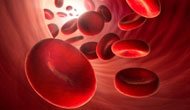
Red blood cells (erythrocytes)
are removed in diseases with an increased genetic defect of the iron metabolism (haemochromatosis)
or other diseases of the erythrocyte lineage. The treatment of such diseases, mainly of
haemochromatosis using blood cell separators is clearly superior to conventional blood letting.
Erythrocyte exchange therapy is used for the treatment of sickle cell anaemia.
White blood cells can successfully be removed for the treatment of otherwise therapy
resistant patients or those who for other reasons have no treatment alternative in patients with
Crohn's disease or colitis ulcerosa. The treatment is simple, easy and effective.
Excessively elevated white blood cells mainly in patients with leukaemia leading to cellular
hyperviscosity can easily be removed from leukaemic patients (cell depletion therapy) to
normalise the cellular blood count and make these patients accessible to chemotherapy which
otherwise might be too risky.
The same holds true for blood platelets if their concentration exceeds 1 - 1.5 million
thrombocytes/µl.
Stem cells can be collected from the patients (or donor) blood to enable autologous stem
cell transfusion or applications currently under development in cardiology and other fields.
Cell therapy can also be performed with collected monocytes and lymphocytes with or
without subsequent manipulation for cancer therapy.
Photopheresis is a treatment where white blood cells are removed and treated with UV
irradiation. The treatment is admitted for cutaneous T-cell lymphoma and is currently expanded to other forms of T cell mediated diseases.
PLASMAPHERESIS
In analogy to cytapheresis procedures
plasmapheresis methods may serve both plasma donation and plasma therapy. As for historical
reasons the term plasmapheresis is taken from plasma donation and one should speak of plasma
separation or therapeutic plasmapheresis if plasma therapy is meant. It is usually an indicator
of ignorance in apheresis and may lead to confusion if such terminology is mixed up.
PLASMAEXCHANGE and PLASMA
(WHOLE BLOOD) DIFFERENTIAL SEPARATION
For plasma exchange therapy the blood
cells of the patient are online separated from the plasma and returned to the patient whereas
in parallel the plasma is exchanged against a substitution fluid. Plasma exchange is technically
outdated but is still used for the treatment of some diseases or special disease conditions.
As plasma exchange is unspecific and unselective the technical development was directed
towards an increased selectivity and specificity (plasma differential separation). Nowadays whole
blood is also applied for some indications where a selective removal can be accepted.
Nevertheless, plasma differential separation permits unspecific, semi-selective, selective and
specific removal of undesired plasma components. The techniques applied are precipitation,
filtration or adsorption.
LDL - APHERESIS, other
LDL - ELIMINATION PROCEDURES
and IMMUNEAPHERESIS (Ig - Apheresis)
LDL - apheresis is a blood purification
procedure which specifically removes Apoprotein B bound cholesterol. It is the first on-line
technique using immuneapheresis, was introduced at the University of Köln in 1981 and is since
then world wide applied. The name was introduced by Prof. Ahrens, Rockefeller University, during
a visit at Cologne in 1982 and is reserved for this technique. It is characterised by a so far
unbeaten specificity, efficacy and economy. It is a first line procedure. Nevertheless, it is
frequently misused by other technologies which also may remove LDL - cholesterol. The worse the
technology, the more frequent is the misuse. LDL - apheresis is technically characterised by
plasma perfusion of two adsorption columns alternatively loaded and desorbed during one treatment and reused at least 50 times but frequently more than 100 times. As compared to other technologies LDL - apheresis is the least expensive LDL removal procedure.
Other techniques permitting for some extent also LDL - elimination are characterised from
precipitation, semiselective filtration and selective (rather than specific) adsorption. They
generally apply disposable columns or filters and their technical efficacy is limited: Either the
adsorption capacity is exhausted applying an adsorber or the removal of other plasma proteins
such as fibrinogen (e.g. if secondary filtration is applied) limits further application. Thus,
these procedures are considered to be second line techniques. However, it has to be mentioned
that the selective removal which means the simultaneous removal of other unrelated plasma
components may have advantages for other lines of indications such as Rheohaemapheresis.
Using LDL - apheresis as a model immunoglobulin (Ig-) apheresis was first developed and
introduced at the University of Cologne. The same type of column was subsequently developed and
distributed as "Therasorb". They are applied for the removal of undesired plasma components like
rheumathoid factors and antibodies or autoantibodies (immunoglobulins). Other technologies use
also substrates e.g. protein A, peptides which bind immunoglobulins or immune complexes
considered to be harmful in mainly rheumathoid diseases. Some types of adsorbers appear to be
more effective by releasing traces of ligands than binding plasma components of such patients.
RHEOTHERAPY and RHEOHAEMAPHERESIS®
Rheohaemapheresis is an extracorporeal
rheotherapy which is characterised by the removal of a considerable amount of high molecular
weight plasma components (and if necessary from a surplus of red cells) to improve organ
perfusion. The technology was originally applied as double filtration in Japan but subsequently
technically improved at the University of Cologne and the German Haemapheresis Centre. Double
filtration is still being used but technically outdated and by far too expensive. Age related
macular degeneration is the first proven indication but a considerable number of other
indications was developed at Cologne since then. Rheohaemapheresis being a systemic treatment
approach represents an improved or even new treatment principle of extracorporeal therapy as
compared to conventional haemorheotherapy.