
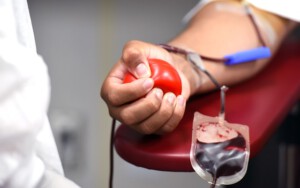
 Wir suchen Spender!
Ab Frühjahr 2024 suchen wir Spender zur Herstellung von Lymphozytenkonzentraten für Wissenschaft, Forschung und zur Entwicklung in der Anti-Krebstherapie!
Sie sollten gesund und zwischen 18 und 59 Jahre alt sein.
Eine angemessene Aufwandsentschädigung lt. Transfusionsgesetz ist selbstverständlich.
Haben wir Ihr Interesse geweckt? Dann lassen Sie sich schon jetzt in unsere Spenderkartei eintragen. Tel.: 0221 954235-0
 Immunadsorption (IA)
Wir behandeln autoimmunerkrankte Patienten, die mit anderen Therapiemaßnahmen keinen Erfolg erzielt haben. Die Behandlung erfolgt durch eine selektive Hämapherese, die sogenannte Immunadsorption (IA).
Bei der Immunadsorption werden Autoantikörper eliminiert. Zur Zeit gibt es keine Behandlungsmöglichkeit um die Autoantikörperproduktion zu verhindern.
Lassen Sie sich von uns beraten, wenn Sie an einer Autoimmunerkrankung (neurologisch, rheumatologisch, dermatologisch, gastroenterologisch,…) leiden.
Die jahrelange Erfahrung zeigt, dass sich die Lebensqualität der Patienten durch eine Immunadsorption signifikant verbessern kann.
bei MS, Guillain-Barré-Syndrom / CIPD, Myasthenia gravis, Lambert-Eaton-Syndrom, Atopie / Neurodermitis
Die TPA wird bei Autoimmunerkrankungen als Therapieoption neben der Immunadsorption, Gabe von Kortison, immunsuppressiven Medikamenten sowie Immunglobulinen erfolgreich eingesetzt. Mit beiden Verfahren werden Autoantikörper und Immunkomplexe, die für die Entstehung und das Fortschreiten autoimmunologischer Erkrankungen verantwortlich sind, entfernt. Die Immunadsorption ist dem Plasmaaustausch überlegen, da hierbei die Immunglobuline und Immunkomplexe gezielter eliminiert werden.
 Long-COVID/Post-COVID- und Fatigue-Syndrom
Wir behandeln das Long-Covid/Post-Covid Syndrom und ME/CFS mit verschiedenen Aphereseverfahren (unter anderem Immunadsorption und Filtration).

 Altersabhängige Makuladegeneration (AMD)
Die AMD kann durch eine Filtrationsbehandlung deutlich gebessert werden.

Bei diesen Krankheiten besteht eine Mikrozirkulationsstörung. Durch die Blutreinigung fließt das Blut besser auch in die kleinsten Gefäße, so dass eine bessere Gewebeversorgung (vor allem mit Sauerstoff) und somit eine Funktionsbesserung eintritt.